
Digital Readiness Lab
Building a digitally ready generation


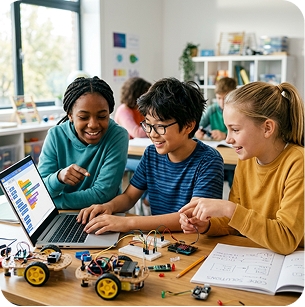
We've spent years asking how much, how long and how old. But Australia's children are already living digital lives.
We need to be preparing them for what comes with it. The pull. The pressure. What's real and what isn't, and when to ask for help.
The Digital Readiness Lab is an independent organisation that defines, measures and builds Digital Readiness for Australian children. We study what makes children ready for digital life, bringing together evidence, organisations, schools, communities and government to build Digital Readiness into childhood.



Our thesis
Digital Readiness has to exist everywhere childhood happens.
A child's digital life doesn't arrive in pieces.
They just have a Tuesday afternoon. A phone on a bus. A group chat that's turned. A video that made them uncomfortable.
The pieces are ours, not theirs.
We can't simply ask kids to become digitally ready. We have to show them.
Partner with us →The Digital Readiness Lab
We don't just study Digital Readiness. We build the infrastructure for it.
The Measure
The Australian Digital Readiness Index. A national baseline, repeated every year so we can see what is changing, where the gaps are and what is actually getting better.
The Definition
The evidence-backed framework for what "ready" means. The capabilities, behaviours and conditions that matter as children move towards greater digital independence.
The Evidence
The questions that still need answering. Original research, commissioned studies, and academic partnerships.
The Tools
Evidence-based practices, products, programs and resources.
The Ecosystem
Where the right questions and the people who can answer them come together.
The Standard
A shared benchmark for Digital Readiness, so families, schools, industry and government are all working toward the same thing.
From evidence to action. Then back to evidence. We measure, we learn, we measure again. What we build evolves as the evidence does.

Adapted from Bioecological model (Bronfenbrenner & Morris, 2006)
The ecosystem
What does your organisation have to do with digital readiness?
Probably more than you think.
Every organisation touching childhood has a role. The Lab helps define it.
The next question
Does turning 16 automatically mean they're ready for the digital world?
Australia has taken a significant step on age-based protection. But restricting access to social media and preparing children for digital life are two different jobs.
The ban determines when children can access certain social media platforms, but Digital Readiness prepares them for what they'll find when they get there.
Capability needs to grow with the child.
From the inside
What's cooking in The Lab?
The Australian Digital Readiness Index
Australia's first national measure of children's Digital Readiness.
The Australian Digital Readiness Index is an annual cross-sectional survey of 1000 parents reporting on children aged 9 to 14.
It maps children's digital lives, the capabilities that define readiness, and the conditions that support those capabilities.
Explore The index →Digital readiness app for kids 9-14
A learner's permit for the internet

Coming Soon


LiVELY turns Digital Readiness into something children can actually practise. Our ambition is simple: No Australian family should have to pay to prepare their child for the digital world. That's why LiVELY will be free for families.
Free for families. Funded by the ecosystem.
A new paradigm
It's more than one app, report or campaign. It's a new way of thinking about the digital world.
DRL Leadership
Meet the people behind The Lab
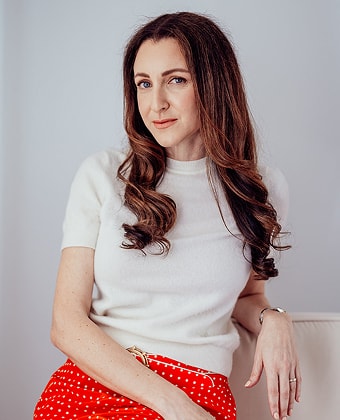
Founder, Digital Readiness Lab
Rinat Strahlhofer
Rinat Strahlhofer is the founder of the Digital Readiness Lab and LiVELY. She leads The Lab's strategy and partnerships, bringing together the researchers, organisations and media shaping childhood. Her job isn't to conduct the science, it's to make sure the science gets used.

Developmental Research Psychologist
Dr Sarah L. Howe
Dr Sarah L. Howe designed the Digital Readiness Index and leads its analysis. Her expertise is in how studies are built and what their data can support. She is engaged independently, with published work in children's emotional development and parenting.

Product Experience, Digital Readiness Lab
Frida Quirk
Frida Quirk leads Product Experience, bridging the gap between research and what gets built. She turns evidence into products, programs and resources, shaping the moment a finding stops being a number and becomes something a child can practise or a parent can pick up.

Strategy & Impact, Digital Readiness Lab
Richard Johnston
Richard Johnston co-founded TripADeal in Byron Bay in 2011, building it into one of Australia's fastest-growing companies before selling to Qantas in 2024. He brings that founder's lens to the Lab, asking: what do we build, who do we build it with, and how do we make Digital Readiness matter at scale?