
DIGITAL READINESS
What does it mean to be ready for digital life?



Digital Readiness is the capabilities a child develops, and their understanding of the environment, as they move toward greater digital independence.
Age ≠ Readiness
A birthday may change access, but it doesn't automatically change capability.
A child may recognise a scam, but struggle to manage attention. Or understand privacy, but find social pressure difficult. Readiness is built on capability, which travels with the child.
The human test
If the parent isn't there to ask, does the child know what to do?
Digital readiness is what a child can do, not what they can access.
Digital Readiness shows up in a child's developing ability to manage attention, judge information, recognise manipulation, navigate social pressure, protect personal information, and know when to ask for help.
What readiness looks like
Three core capabilities
Self-Regulation
Can they manage their attention and do they know when to stop?
Critical Judgement
Can they tell what's real, recognise manipulation and question what they see?
Help-Seeking
Can they recognise when something isn't right and ask for help?
The evidence
Who is looking at Digital Readiness?

Most of the research relevant to Digital Readiness is spread across multiple disciplines like developmental psychology, digital literacy, online safety, and technology education.
Different fields have different interests. They're answering different parts of the same question.
The Lab connects the evidence.
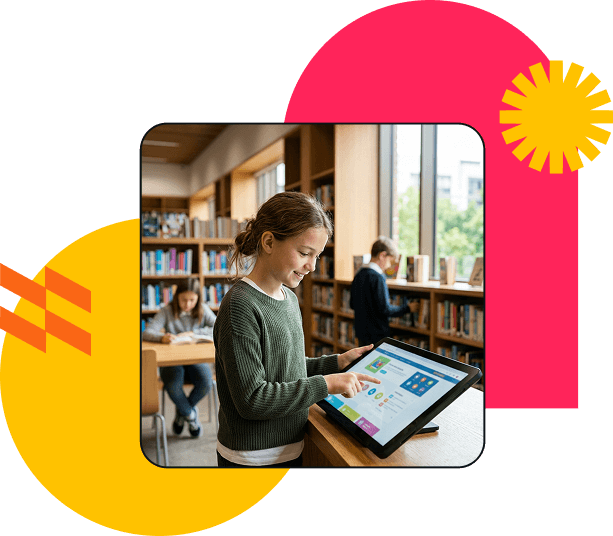
Adapted from Bioecological model (Bronfenbrenner & Morris, 2006)
The ecosystem
Digital Readiness takes a holistic approach.
It's not only a capability within a child. It's shaped by the ecosystem around them.
The Australian Digital Readiness Index
We looked at the capabilities behind digital readiness
Australia's first national snapshot of children's digital readiness.
The Australian Digital Readiness Index is an annual cross-sectional survey of 1,000 Australian parents, each reporting on one child aged 9-14. It measures what children are doing online, the capabilities that make up readiness, the beliefs and practices of the parents around them, and what has actually happened.
Repeated annually on the same instrument, it becomes a record of change. Our first data is already asking some big questions.
Explore the index →
From understanding to action
What changes when we understand readiness better?
Better products
Evidence that supports the development of digital experiences across the different stages of independence.
Better support for families
Parents need more than rules. They need practical ways to help children build judgement, capability and healthy digital habits.
Better schools and communities
A shared language for readiness helps the adults around children reinforce the same capabilities.
Better policy
Evidence can help shift the conversation from access alone towards the capabilities and conditions children need for digital life.
Better standards
Over time, this ecosystem can help establish transparent expectations for all organisations shaping digital childhood.